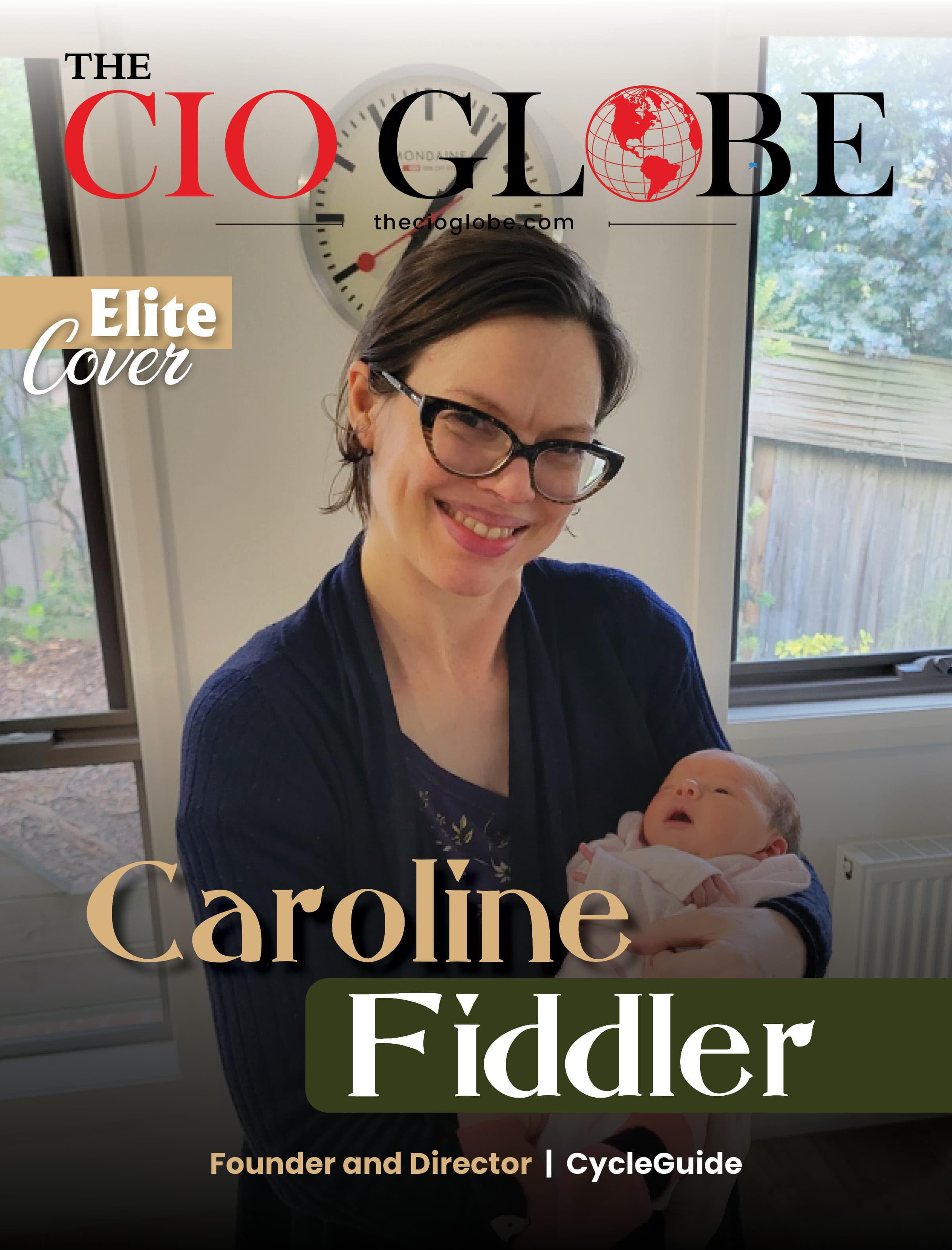
Dr. Caroline Linda Fiddler: Reimagining the IVF Patient Experience Through Simplicity and Empathy
Dr. Caroline Linda Fiddler: Reimagining the IVF Patient Experience Through Simplicity and Empathy
Turning a Personal Experience into a Purpose-Driven Innovation
Some healthcare innovations begin with years of research. Others begin with a simple question that refuses to go away. For Dr. Caroline Linda Fiddler, Founder and Director of CycleGuide, that question was born from her own experience of navigating healthcare as both a doctor and a patient: “There has to be a better way.”
Caroline’s professional journey began with an interest in science that led her to medical school. Her career as a doctor took her through different areas of medicine, healthcare settings, and states across Australia. Along the way, she witnessed significant differences in the way healthcare information was communicated and recorded. Some hospitals relied on paper records, others used different electronic medical record systems, and some relied on a combination of both. Faxes and pagers could still play a role in communicating important information.
For a healthcare professional, these systems can become part of everyday working life. For patients, however, fragmented communication can add another layer of complexity to an already challenging experience.
That reality became particularly personal when Caroline experienced IVF herself.
After changing fertility doctors and moving to a smaller, close-knit clinic, she was surprised to receive treatment instructions that were largely photocopied documents. While the medical expertise behind the treatment was highly specialised, the way the information was presented did not seem to reflect that complexity.
The experience sparked an idea: fertility treatment instructions could be delivered in a more practical, accessible, and patient-centred way.
That idea became CycleGuide.
Caroline began exploring app companies, worked with Appetiser Apps in Richmond, Victoria, collaborated with a designer, and eventually worked with developers to transform her concept into an interactive application. The product was subsequently launched in Australia and New Zealand and, more recently, in the United Kingdom.
Leading with Conviction
At the centre of Caroline’s entrepreneurial philosophy is a simple principle: have the courage of your convictions.
The journey to develop CycleGuide was not without doubt. Family members were understandably concerned about the financial cost and risk. Her accountant was initially bemused and later cautious about the technology venture. Even humorous comments from people around her reflected how unconventional the decision appeared.
But Caroline remained focused on the problem she had experienced personally.
Her approach does not mean ignoring criticism. Instead, she learned to distinguish between feedback that genuinely improves a product and suggestions that may unintentionally make it more complicated.
This became especially important during CycleGuide’s development. Caroline repeatedly returned to a fundamental question: Will this help the patient, make things more difficult, or is it necessary?
That mindset shaped both her leadership style and the product itself.
She identifies three qualities as particularly important to her journey: conviction, perseverance, and empathy. Conviction gave her the confidence to trust her judgement. Perseverance helped her continue despite setbacks and false leads. Empathy allowed her to consider the experiences of both patients and healthcare staff.
Designing Technology Around the Patient
CycleGuide was created with a deliberately focused purpose: simplifying IVF treatment instructions while giving patients a greater sense of control.
The standalone version allows patients to enter their own treatment instructions, while the integrated version enables clinics to send instructions directly to patients’ phones. The development approach began with a Minimum Viable Product, allowing the team to create a practical solution that could reach patients without waiting for every clinic to commit to integration.
The app’s interface reflects Caroline’s commitment to simplicity.
Its main screen includes a monthly calendar and a daily task list, allowing patients to see individual tasks while also understanding where each day sits within a wider treatment cycle. Tasks can include blood tests, ultrasounds, medication, procedures, and appointments.
Patients can schedule tasks, receive reminders, and mark completed activities. The design is intentionally flexible so that it can accommodate different fertility cycles and procedures.
The visual identity is equally intentional.
Instead of using conventional baby-focused imagery or pink and blue themes, CycleGuide uses a neutral green identity. The aim is to create a discreet experience so that someone looking at a user’s phone would not immediately know that the app relates to IVF.
For Caroline, this is part of understanding the emotional reality of fertility treatment.
Simplifying the Most Complex Details
Medication is one of the more complicated elements of IVF, particularly because instructions can change as a cycle progresses.
Rather than creating an extensive medication database that could become difficult to maintain across countries and healthcare systems, CycleGuide allows patients to enter medication names themselves. They can use brand names, generic names, nicknames, or descriptive terms.
This flexibility reflects Caroline’s own treatment experience. Medication schedules can change depending on blood tests and ultrasounds, meaning that fixed end dates are not always appropriate.
The app also includes a pre-cycle checklist inspired by Caroline’s experiences across multiple treatment cycles. Preparing for treatment can involve practical challenges, including obtaining medications and understanding when a cycle officially begins.
The philosophy behind these features is consistent: technology should reduce cognitive and administrative pressure rather than introduce another layer of complexity.
Staying True to the Original Idea
Maintaining simplicity became one of Caroline’s greatest challenges.
During development, she received suggestions to add more features and create more complicated pathways. One particularly influential piece of advice came from Jarrod MacFarlane, a project manager at Appetiser Apps, who encouraged her to focus on making the basics work exceptionally well.
That principle helped Caroline resist the temptation to over-engineer the product.
She considered creating separate pathways for egg collections, embryo transfers, and intrauterine insemination. However, she recognised that these treatments share many common tasks despite differences in medication and monitoring.
Instead of forcing patients into rigid pathways, CycleGuide was designed with flexibility in mind.
The same philosophy influenced medication selection. A large predefined list of fertility medications might seem convenient, but Caroline concluded that it could actually make the product more difficult to use. A free-text system provided a simpler alternative.
Overcoming the Challenge of Changing Established Systems
Developing the technology was only one part of the challenge. Another was convincing fertility clinics that the problem itself required a new solution.
At a fertility conference in Melbourne in 2024, Caroline showed her paper treatment instructions to a fertility doctor. His response—that he had never seen treatment instructions before—highlighted a significant difference between the patient’s and healthcare professional’s perspectives.
Caroline also experienced the uncertainty of entrepreneurship when clinics that initially showed enthusiasm later withdrew or stopped responding. One clinic even progressed toward integration before ultimately choosing another portal.
These experiences taught her that creating a solution and convincing an industry to adopt it are two different challenges.
Milestones That Validated the Vision
Several moments have provided meaningful validation along the way.
One came when a fertility nurse reviewed CycleGuide and told Caroline that it was exactly how she would have developed an app herself.
Another significant milestone was integrating CycleGuide with a fertility clinic in Sydney. The integration demonstrated that treatment instructions could be transferred from Salesforce directly into the app without requiring manual re-entry. Although the clinic eventually chose another portal, the experience demonstrated the technical potential of the concept.
In 2026, CycleGuide was shortlisted for the Best Treatment Support and Coordination category at the Fertility Care Awards held during the European Society of Human Reproduction and Embryology conference in London. Although Caroline did not win, she regarded being shortlisted alongside IVF clinics and other founders as an important recognition of the problem and solution she had developed.
CycleGuide has also recently launched in the United Kingdom, following its availability in Australia and New Zealand. Caroline reports positive feedback and support from fertility-related companies in the UK as she works toward increasing patient downloads and developing clinic partnerships.
Building a Global Future
Looking ahead, Caroline envisions CycleGuide becoming available globally through both standalone and integrated versions.
She also sees opportunities for white-labelled versions carrying individual clinic branding, allowing the technology to become a more seamless part of the patient experience.
Another objective is broader clinic integration, enabling patients to receive written instructions through the app around the same time that nurses provide verbal guidance.
Beyond fertility care, Caroline sees potential for the technology to support oncology patients. Her previous training in radiation oncology exposed her to the complexity of cancer treatment, including radiotherapy, chemotherapy, immunotherapy, appointments, procedures, and changing medication schedules.
The potential connection lies in helping patients manage complex treatment responsibilities during periods that may already be physically and emotionally demanding.
A Better Way Forward
Dr. Caroline Linda Fiddler’s journey demonstrates how meaningful innovation can emerge when professional expertise meets lived experience.
CycleGuide began with a personal frustration but developed into a focused healthcare technology solution built around simplicity, flexibility, and empathy. Its journey has included product development, clinical integration, international recognition, and expansion into the United Kingdom.
Yet the central philosophy remains unchanged.
Caroline’s advice to future entrepreneurs is straightforward: have a go. She acknowledges that knowing how difficult the journey would be might have prevented her from starting. But by taking the first step, she discovered that the problem she identified was real and that her solution could offer a practical response.
Her story is ultimately about challenging accepted ways of doing things and having the conviction to explore alternatives.
From the perspective of a doctor, a patient, and now a healthcare entrepreneur, Caroline continues to pursue the same idea that started CycleGuide:
There must be a better way.
Feature Your Enterprise in THE CIO GLOBE
Amplify your executive narrative, showcase technical innovations, and secure global thought leadership.